What Is a DTF Printer
A DTF printer is a cutting-edge printing device that lets you create vibrant, detailed designs by printing them onto a special clear film instead of directly on fabric. This direct-to-film printing technology is revolutionizing custom apparel creation by offering high-quality prints with excellent durability.
You then apply adhesive powder and heat the design to transfer it onto various materials like cotton or polyester. This process makes strong, colorful prints that last. It’s great for custom apparel without the high setup costs of other methods.
If you want to understand how this innovative technology works and its benefits, keep exploring. DTF printers provide an affordable and versatile solution for personalized clothing and promotional items.
Key Takeaways
- A DTF printer prints vibrant designs onto clear film using water-based pigmented inks for fabric transfers.
- It uses inkjet technology to produce sharp, detailed images on special transfer films.
- The printer enables applying designs that will later be coated with adhesive powder for heat transfer.
- DTF printers are compatible with various fabrics including cotton, polyester, and blends.
- They facilitate cost-effective, durable, and flexible prints ideal for custom apparel production.
Understanding Direct-to-Film Printing Technology
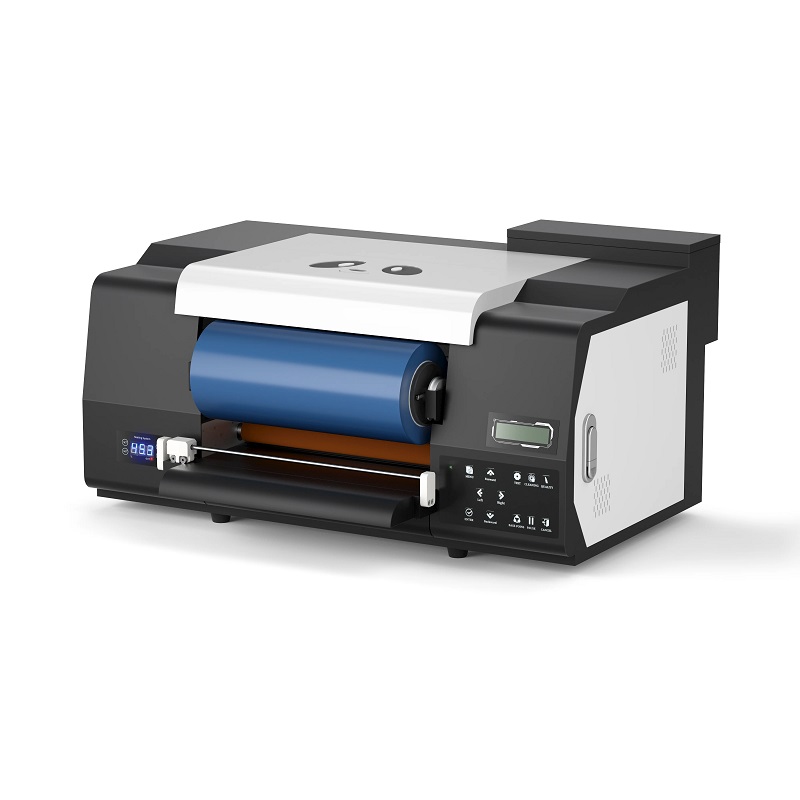
Although direct-to-film (DTF) printing might sound complex, it’s actually a straightforward process that lets you transfer vibrant designs onto various fabrics using a special film and adhesive powder. When you use DTF technology, you’re fundamentally printing your design onto a clear film first, not directly onto the fabric. This film acts as a carrier for the ink.
After printing, an adhesive powder is applied to the wet ink on the film, which helps the design stick to the fabric during heat pressing. What’s great about this method is its versatility—you can apply designs to cotton, polyester, blends, and even hard-to-print materials. Plus, DTF printing produces durable, colorful prints with excellent detail, making it a popular choice for custom apparel and merchandise.
The Process Behind DTF Printing
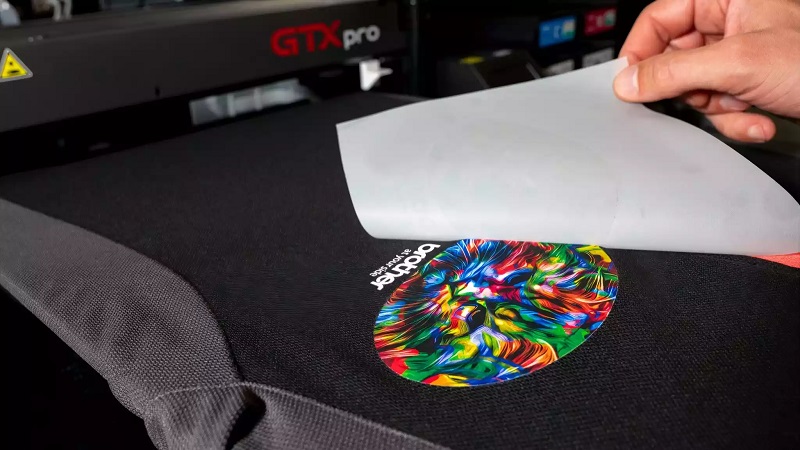
Now that you know the basics, let’s look at how DTF printing actually works. It starts with printing your design onto a special film, then applying a powder that sticks to the ink. This powder adhesion process is key before transferring the image onto your fabric.
Film Printing Technique
When you immerse yourself in the film printing technique behind DTF printing, you’ll find it’s a precise process that transforms digital designs into vibrant prints on fabric. First, you print your design onto a special film using a DTF printer with water-based pigmented inks. This film acts as a carrier for the ink.
Next, the film is ready to be processed further before transferring.
| Step | Description |
|---|---|
| Printing | Inkjet prints design on clear film |
| Ink Drying | Printed film is dried for set ink |
| Preparation | Film is prepped for powder adhesion |
This technique ensures sharp, detailed images that adhere well when heat pressed onto textiles, giving you durable and colorful results.
Powder Adhesion Process
Once the film is prepped and the ink has dried, the next step is applying the adhesive powder that makes the design stick to the fabric. You’ll sprinkle a fine layer of hot-melt powder evenly over the printed film. This powder acts like glue, bonding the ink to the fabric once heat is applied.
After dusting, you shake off any excess powder to avoid clumps or uneven adhesion. Then, you cure the film using a heat source, typically a heat press or conveyor dryer, which melts the powder slightly, guaranteeing it sticks firmly to the ink. This process is essential because it ensures your design won’t crack or peel after washing.
Mastering powder adhesion means your prints will be durable, vibrant, and professional-looking every time.
Key Benefits of Using a DTF Printer
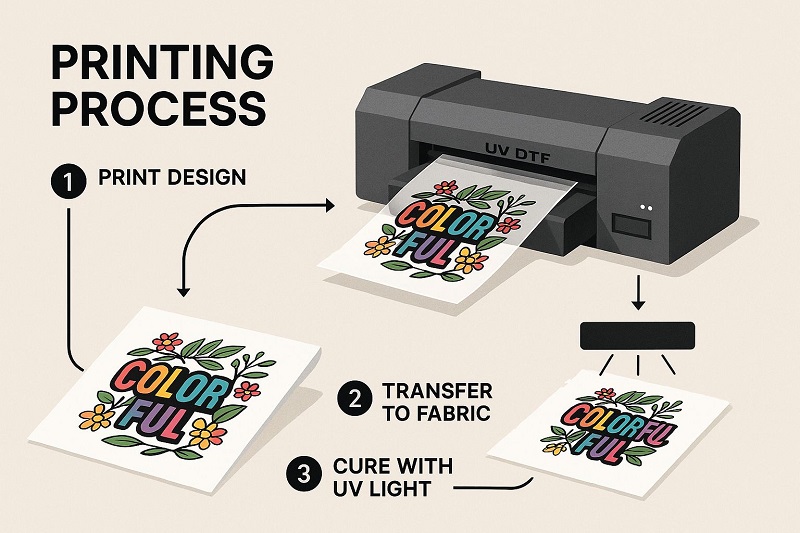
When you use a DTF printer, you get the flexibility to print on a wide range of fabrics and materials. It also helps you save money with its cost-effective production process.
Let’s explore how these benefits can boost your printing projects.
Enhanced Print Versatility
Although you might think printing options are limited, a DTF printer actually offers incredible versatility that lets you create vibrant designs on a wide range of fabrics and materials. Whether you’re working with cotton, polyester, blends, or even synthetic fabrics, a DTF printer can handle them all with ease. This means you’re not restricted to just one type of garment or surface.
Plus, the prints are durable and flexible, maintaining their quality even after multiple washes. You can also print on dark or light-colored fabrics without worrying about colors fading or losing vibrancy. This enhanced print versatility empowers you to expand your product offerings and experiment with creative designs that appeal to different customer preferences.
Cost-Effective Production
Many businesses find that investing in a DTF printer considerably cuts production costs without sacrificing quality. When you use a DTF printer, you eliminate the need for expensive screens or plates required in traditional printing methods. This reduces setup time and materials, making short runs and custom orders more affordable.
Plus, DTF printers use efficient ink consumption, so you’re not wasting resources. You also save on labor since the process is straightforward and faster, allowing you to handle more orders in less time. Overall, this means you can offer competitive pricing while maintaining high-quality prints.
If you’re looking to optimize your production for both cost and quality, a DTF printer is a smart investment that boosts your business’s profitability.
Types of Fabrics Compatible With DTF Printing
DTF printing works best with a variety of fabrics, giving you plenty of options to bring your designs to life. You’ll find it works great on cotton, polyester, and blends, making it super versatile. Cotton fabrics absorb the ink well, resulting in vibrant, durable prints.
Polyester and synthetic blends also respond nicely, especially for activewear or performance gear. Plus, DTF is perfect for materials like canvas and nylon, expanding your creativity beyond typical t-shirts. Unlike some other methods, you don’t have to worry about fabric texture as much, since the adhesive film helps the print stick smoothly.
Comparing DTF Printing to Other Methods
When you’re choosing a printing method, it’s important to understand how direct-to-film compares to screen printing, heat transfers, and DTG. DTF printing offers vibrant colors and works well on various fabrics without requiring pretreatment, unlike DTG which needs cotton and pretreatment for best results.
Compared to screen printing, DTF is more cost-effective for short runs since it doesn’t require stencil creation. Heat transfers can be quick but often lack durability and flexibility, while DTF prints are more durable and flexible.
Additionally, DTF allows for easy layering of colors with sharp details, making it great for complex designs. So, if you want versatility, efficiency, and quality on multiple fabric types, DTF is a strong option to contemplate over traditional methods.
Tips for Choosing the Right DTF Printer
If you’re impressed by the benefits of direct-to-film printing, picking the right printer is key to making the most of its advantages. To help you choose wisely, consider these tips:
- Print Quality and Resolution: Look for printers that offer high resolution for crisp, vibrant prints. This ensures your designs stand out on any fabric.
- Ink Compatibility and Cost: Make sure the printer supports reliable DTF inks. Also, factor in ink expenses to keep your production affordable.
- Printer Size and Speed: Choose a printer size that fits your workspace and matches your production volume. Faster printers boost efficiency without sacrificing quality.
Frequently Asked Questions
How Long Does a DTF Print Typically Last on Fabric?
Your DTF print typically lasts around 20 to 30 washes if you care for it properly. Avoid harsh detergents, wash inside out in cold water, and air dry to keep the print vibrant and durable longer.
Are DTF Printers Suitable for Home Use or Only Commercial?
If you’re like Sarah, a hobbyist, you’ll find DTF printers suitable for home use, especially compact models designed for small spaces. They’re versatile but can be pricey and need maintenance, so weigh your budget and commitment first.
What Maintenance Is Required for a DTF Printer?
You’ll need to regularly clean the print heads, keep the ink cartridges topped up, and maintain proper temperature and humidity levels.
Also, perform routine nozzle checks and use cleaning solutions to prevent clogs and guarantee vibrant prints.
Can DTF Printing Be Used for Promotional Products?
Imagine vibrant logos dancing on tote bags and caps—that’s exactly what you can achieve with DTF printing for promotional products.
You’ll get sharp, colorful designs that catch eyes and boost brand recognition effortlessly.
How Eco-Friendly Is the DTF Printing Process?
DTF printing can be moderately eco-friendly since it uses less water and energy than traditional methods. However, you’ll want to contemplate the ink and film waste, which may impact its overall environmental footprint.
Conclusion
You might think DTF printers are too complex or expensive to try, but they’re actually more user-friendly and affordable than you’d expect. Once you get the hang of the process, you’ll appreciate the vibrant prints and versatility they offer on various fabrics.
Whether you’re a beginner or pro, a DTF printer can be a game-changer for your projects. Don’t let initial doubts hold you back from exploring this innovative printing method!
Investing in a DTF printer opens up new creative possibilities and ensures high-quality, durable designs. Embrace the future of fabric printing with a reliable and efficient DTF printer today.